
Chicks and Tweeback
Huge piles of dirty snow holding my yard hostage are melting fast. A fresh flurry covers the ground sometimes but it’s short lived. Our incubator is full of chicken eggs, due to hatch by the end of March break. Spring is surely near.
We’ve got another, smaller incubator going at my sister in law’s house so that her kids can share the experience. Once those eggs hatch, they’ll join our hatchlings in the brooder. Tending the poor motherless chicks through the first, vulnerable days of their lives is an anxious time.
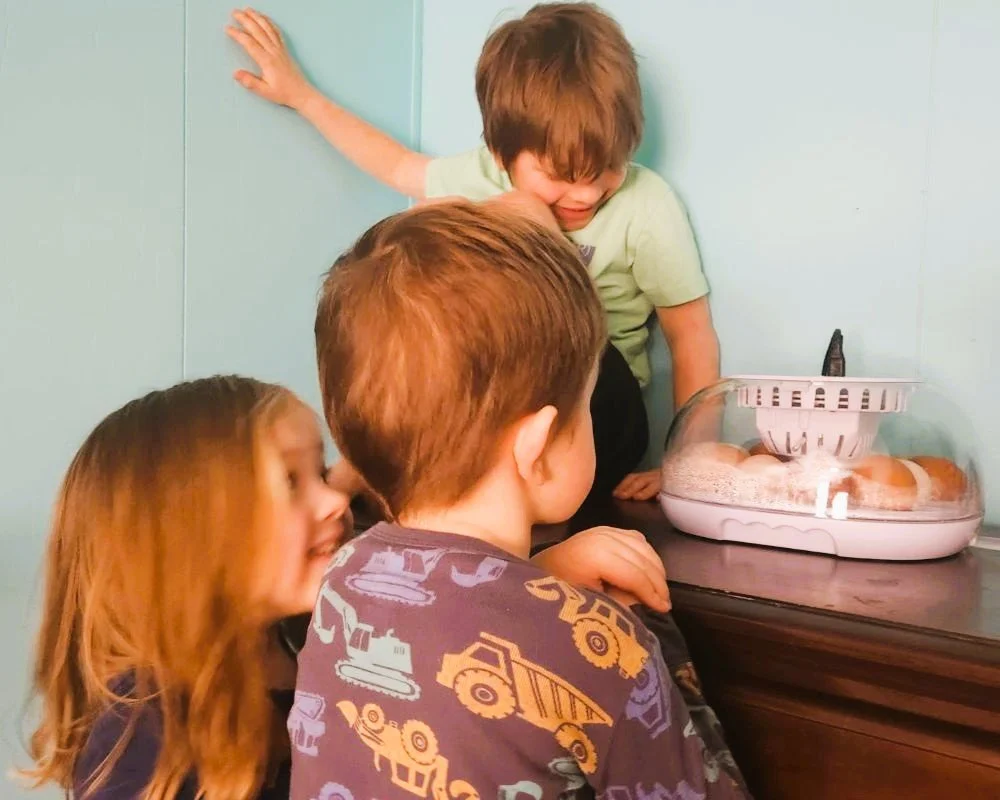
A few more sleeps before the eggs hatch. Photo courtesy of Janet Ball.
On the bright side
On the bright side, I made Tweeback. Not the actual double bun, but the regular sandwich bun. I’d call it Eenbock but most people wouldn’t know what I’m talking about. I use roughly equal parts white and whole wheat flour for a compromise between flavour and fiber. I use olive oil but I can’t taste it in the finished product, which is good.
I’d call my tweeback adequate. They taste good and they’re light, soft and fluffy. They just lack that hallmark crispy, crackly crust. That’s the stamp on a good Mennonite tweeback and I don’t have it. I know it’s because I don’t bake them hot enough but I’m scared they’ll dry out. The other problem could be that I don’t use schmalt and butter. Our great-grandmothers in Mexico and Russia would laugh me out of the darp with my sad little bowl of oil. If I ever feel like living dangerously, I’ll break out the schmalt, crank the heat and cut the bake time by a few minutes, see how that does.
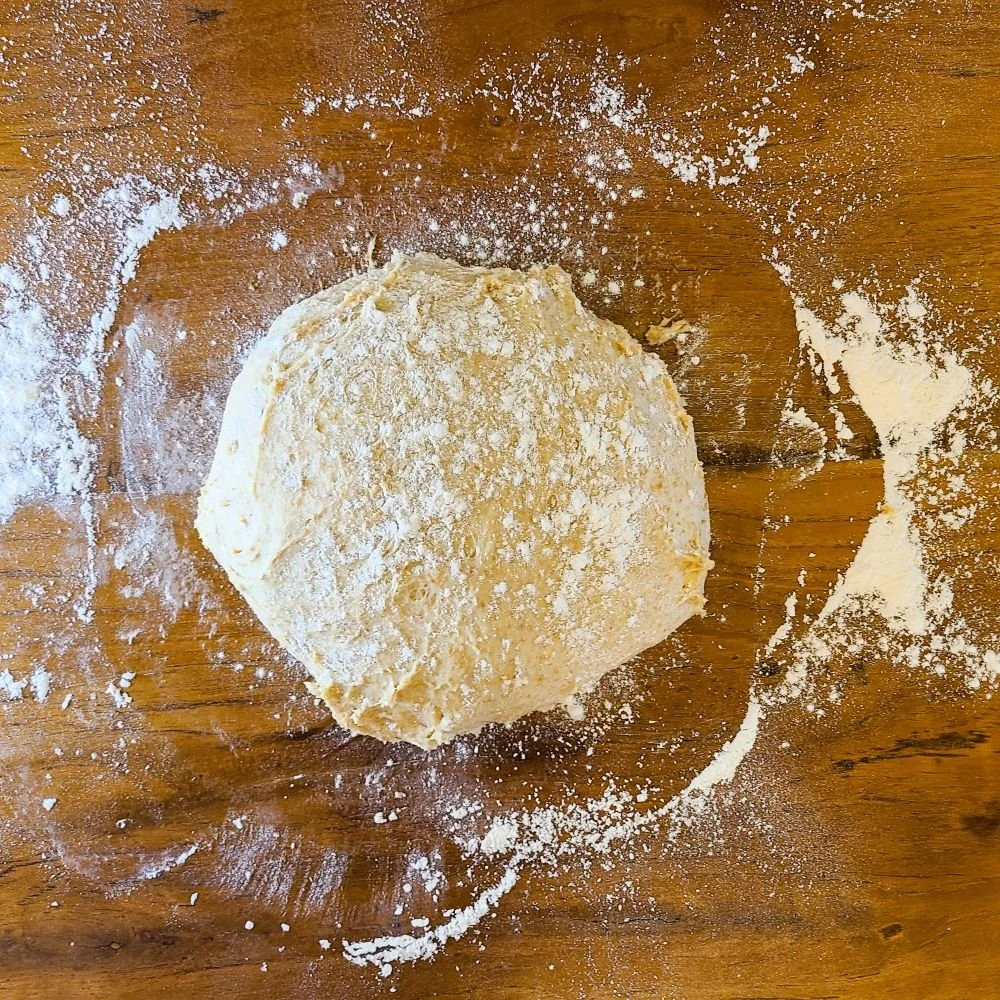
Ready to rise.
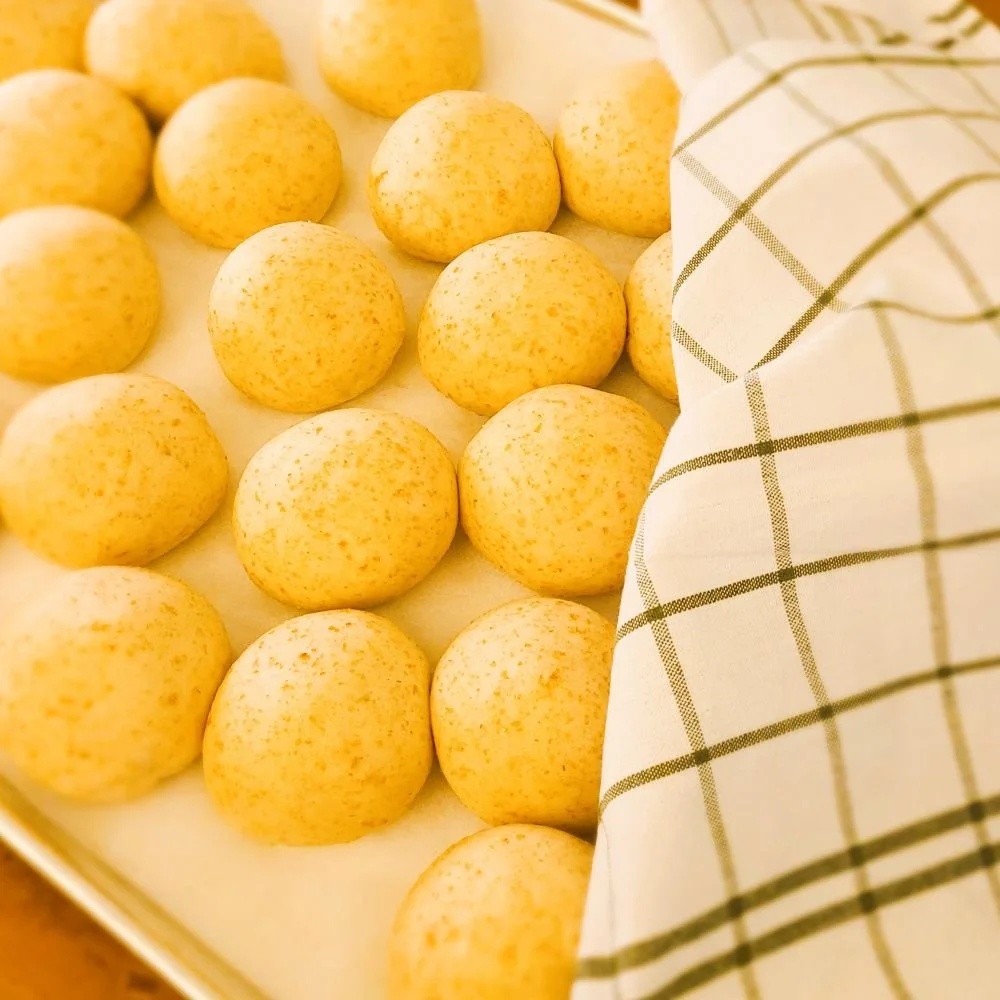
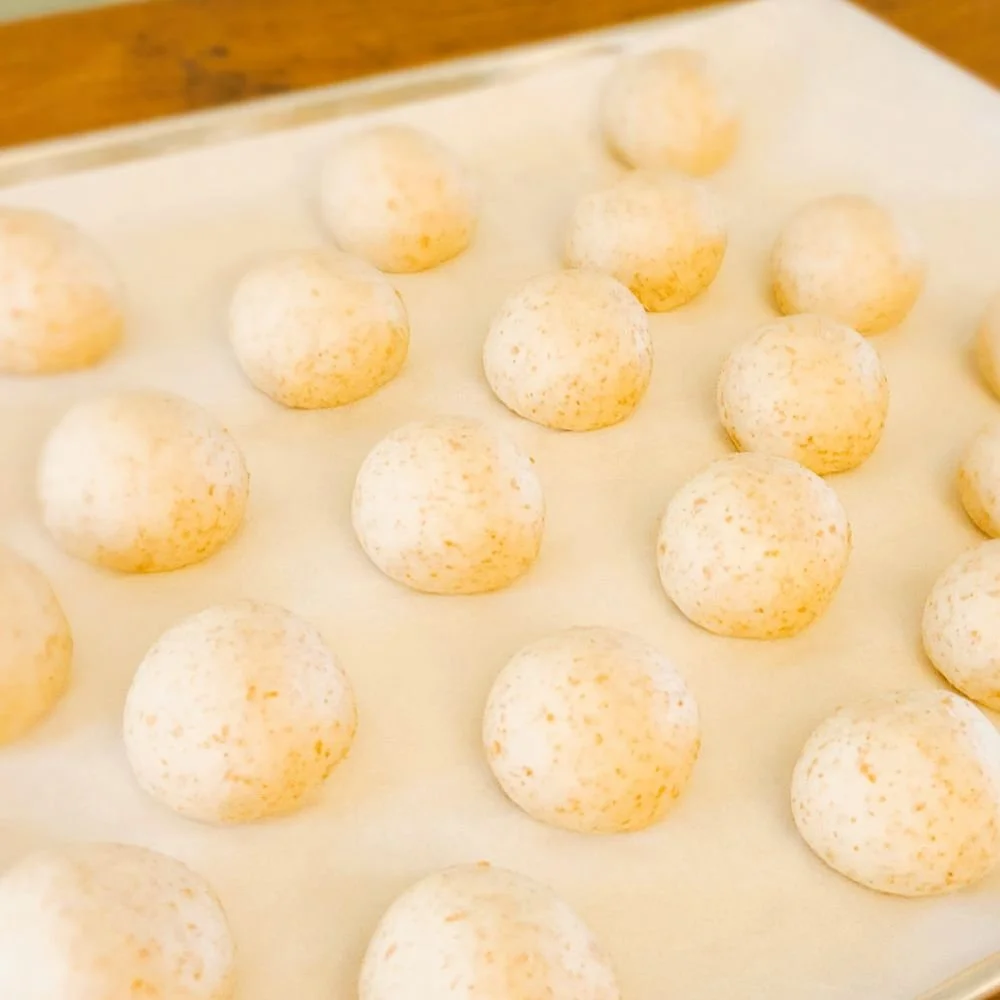
Ready to bake. They don’t actually change colour that dramatically while rising; it’s just the evening light.
As a kid, I sat at our long wooden table across from my mom to watch her knead and shape dough for Tweeback, Bulkje and Krinjel. Seeing the dough billow like a giant mushroom out of the bowl and watching Mom punch it down were the best parts. Her bread had the crispy, crackly crust.
She mixed her dough in a huge black and white speckled enamelware bowl. The Mennonite woman of 19th century Russia prepared her dough in a handmade wooden dough trough which held pride of place in her kitchen. Some were polished to a shine and carved with fine details. I’m glad they enjoyed beauty in their everyday utilitarian things. Their lives weren’t easy. I make my dough in a nondescript stainless steel bowl.
When I started making my own bread I gained a new appreciation for how hard Mom had worked to bake for our family of twelve. Kneading dough meets all the requirements of good cardio. A damp film breaks out on your forehead. Your breath comes in gasps and you can talk but not sing. You can’t skip it though because the more you knead, the better that bread’s going to be. It was the only time my mom tied her düak at the nape of her neck instead of under her chin and this gave her a sassy, take-charge look. One woman online said she kneads dough to relax. I can’t imagine what she does for exercise. Maybe she only makes one bulkje at a time.
Rolling tweeback
After all the mixing, rising, punching and kneading came the other best part: shaping. Good tweeback need proper hand and wrist movement to make them rise up instead of spreading sideways. I felt silly the first time I tried to imitate my mom rolling tweeback and the results didn’t make me feel any better. I kept practicing though, and soon it was easy.
You start by pulling off a piece of dough bigger than an egg but smaller than a tennis ball. Rest the side of your hand on your work surface, keeping your wrist stiff. Lightly cup that hand around the dough and move it in a circular motion. You’re not squeezing the dough; you’re just rolling it around inside the constraints of your cupped hand. The dough will form a smooth ball and kind of tuck into itself. The bottom might show a swirl pattern from all that rolling but nobody’s looking under there. Drop that tweeback on a cookie sheet and start the next one. Soon it will become second nature.
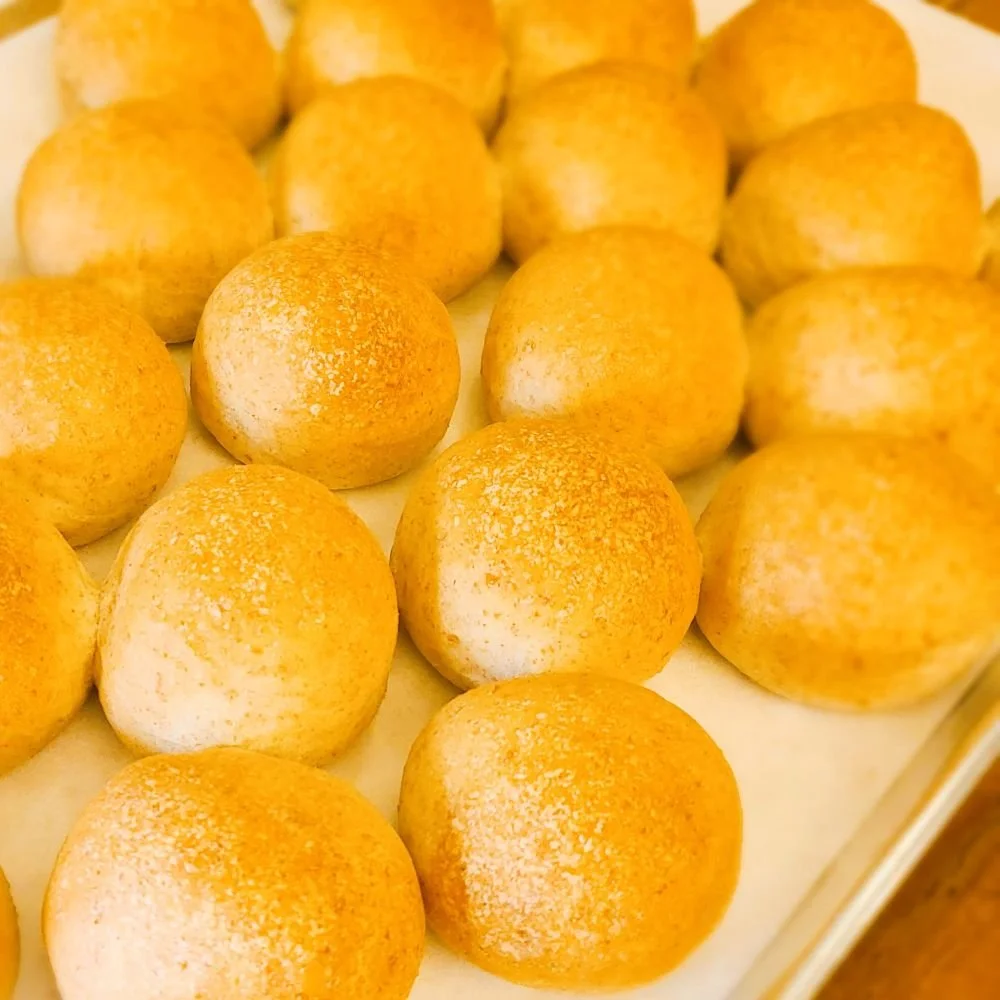
Ready to eat.
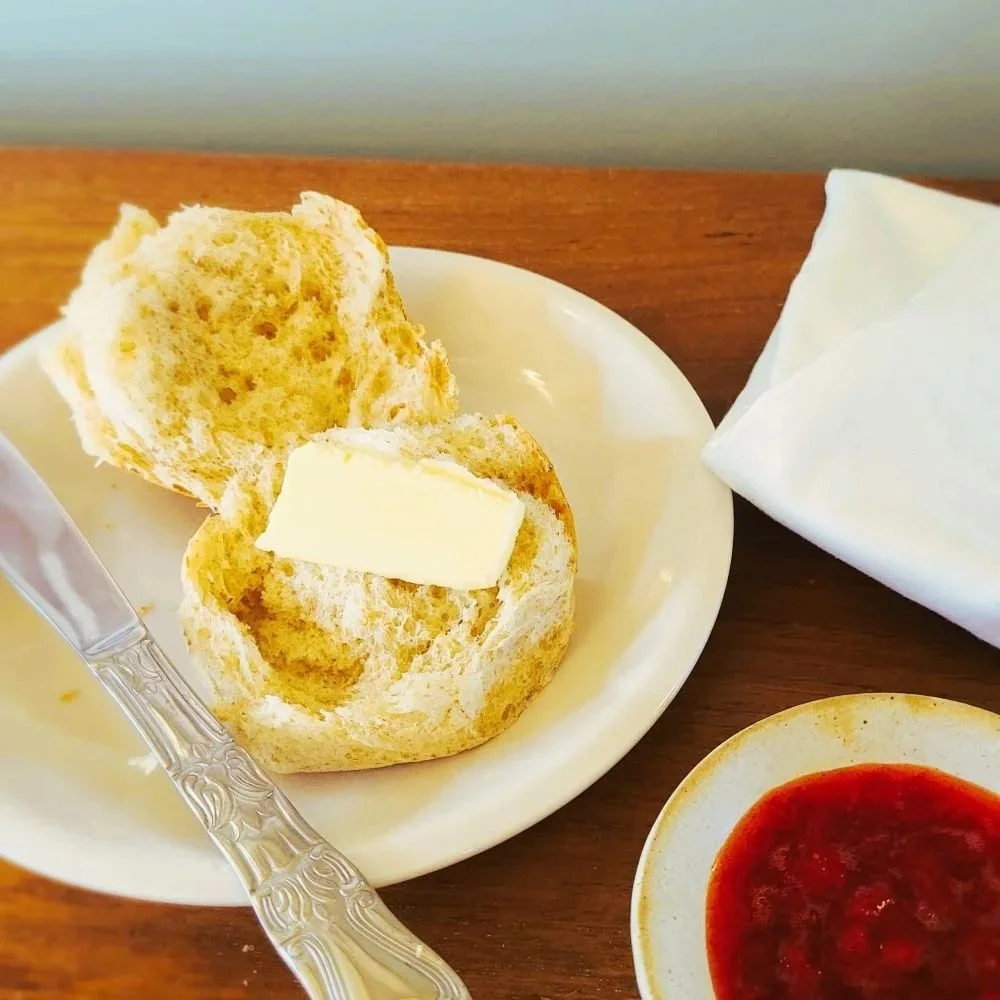
In the Old Colony church today, a food committee looks after all aspects of the faspa served after the burial at funerals but when I was little, all the church women brought something from home – a bag of tweeback and some butter or sugar cubes. They faithfully carried out this age-old tradition whether they knew the deceased or not because weddings and funerals were community events. You didn’t have to go, but if you went, you brought food.
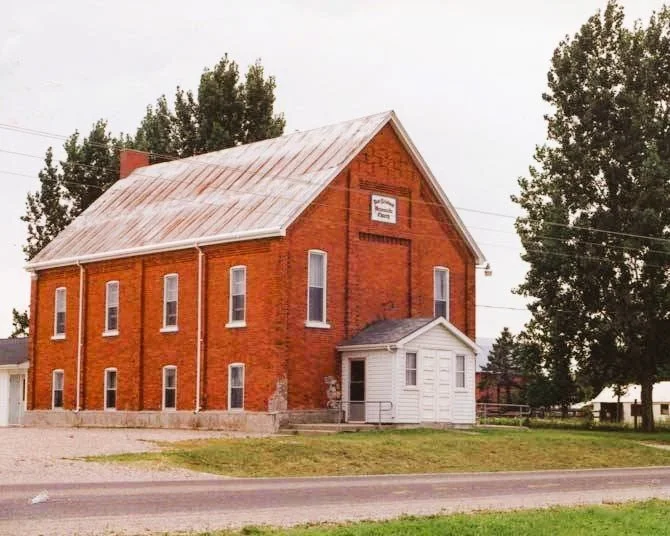
The former Old Colony Mennonite church near Aylmer, Ontario. When this photo was taken, the ownership of the building had passed to the Reinland Mennonite church. Photo courtesy of Trudy Wiebe.
In the seventies and eighties, the Aylmer congregation gathered in a red brick church on a dirt road in the country. Back then, I figured they always had. When you’re five years old, everything that is has just always been. I realize now how new and in their infancy the Mennonite churches in Ontario were then, and not just the Old Colony Gemeint. Old names and dates suddenly make sense. That sundrenched, dusty road is paved now and the red brick church is gone, like many good things.
If you want to bake tweeback fractionally less authentic but healthier than Grandma’s, check out my recipe.
The aroma of tweeback baking in the oven is the surest way to flood your kitchen with memories of that special mom, grandma or taunte.